Water is the elixir of life on earth, indispensable for humans, animals and plants. Global warming,...
Summer Puts Water Supply Systems to the Test: Why Data Is Critical
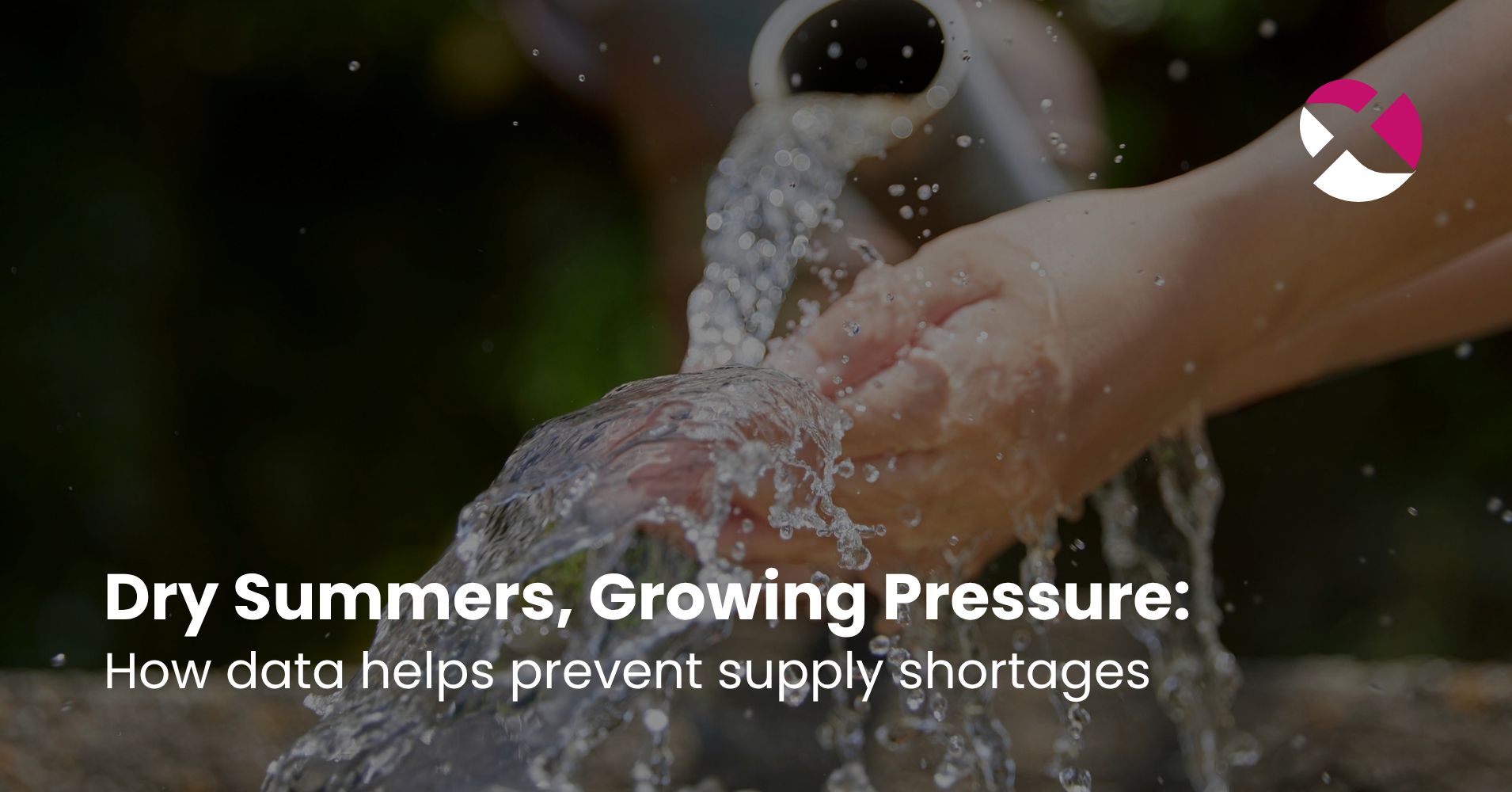
A few hot days are not enough to destabilise a water supply system. The real challenge begins when high temperatures, prolonged dry weather and rising demand persist over an extended period. That is when developments that may have been building for months become impossible to ignore: soils dry out, river levels fall and groundwater reserves fail to recover sufficiently. At the same time, demand increases, driven by garden irrigation, agriculture, tourism and commercial use.
For water utilities and local authorities, this creates a complex challenge. They must assess not only how much water is available overall, but also whether abstraction, treatment, storage and distribution can continue to operate reliably under exceptional pressure.
Water scarcity is rarely just a question of total volume
Germany is generally considered a water-rich country, yet shortages can still occur at specific times and in specific regions. Water is not always available where it is needed, nor necessarily at the time when demand is at its highest.
This becomes particularly clear during peaks in summer consumption. Even when the total annual volume appears sufficient on paper, several consecutive weeks of hot, dry weather can place individual wells, storage facilities, treatment plants and sections of the distribution network under considerable strain. Annual averages alone are therefore not enough for reliable planning.
What matters is understanding when, where and by how much demand is changing. It is equally important to know what reserves are available within the system and how long they would last if dry conditions continued. Only by looking at both sides together — available resources and actual pressure on the system — is it possible to build a realistic picture of supply conditions.
Rain does not automatically mean the pressure has passed
After a few days of rain, it is easy to assume that the drought is over. Rainfall may provide short-term relief for the upper layers of soil, but its effect on deeper layers and groundwater often takes much longer to become visible.
This is particularly relevant for drinking water supply, as a large share of Germany’s drinking water comes from groundwater. Current weather conditions alone therefore reveal little about whether the situation is genuinely improving. Rainfall over previous months, soil moisture, groundwater recharge, abstraction volumes and local geological conditions must all be taken into account.
A single measurement cannot capture these relationships. Only longer time series can show whether a change is temporary or whether it forms part of a trend that may have long-term consequences.
Water quality also comes under pressure
During periods of drought, attention usually focuses first on the amount of water available. For utilities, however, the quality of raw water — and the effort required to treat it — is just as important.
Low water levels can change the concentration of certain substances in rivers and lakes, while higher water temperatures affect biological and chemical processes. When heavy rainfall follows a prolonged dry spell, sediment, nutrients and other substances can also be washed into rivers, lakes or reservoirs within a very short period.
As a result, monitoring and treatment requirements may increase even when enough water is still available in quantitative terms. Supply security therefore always depends on considering both availability and quality.
A large number of measurements does not automatically create a clear picture
Water supply data is already collected in many places: at wells and water treatment plants, by weather services, environmental authorities, municipalities, network operators and agricultural businesses.
The main difficulty is therefore often not that too little data exists. The problem is that the available datasets cover different geographical areas, follow different measurement intervals and use different formats. Some information is available almost in real time, while other data is updated only periodically. There may also be gaps, unclear responsibilities and information that remains confined to individual organisations.
For sound decision-making, collecting ever more data is not enough. The information must be compatible, reliable and understood within the right technical context.
An unusually high level of consumption, for example, may have several possible causes: a heatwave, new customers, a major industrial user or a previously undetected leak. Only by comparing consumption figures with weather data, historical patterns and information from the distribution network can the situation be interpreted properly.
The value of data lies in the decisions it supports
A dashboard alone does not make a water supply system more secure. What matters is which measures are derived from the information it provides and whether responsibilities have been defined before a critical situation develops.
This requires specific thresholds and agreed procedures. At what groundwater level should abstraction be adjusted? When should additional supply sources be brought online? At what point should a public awareness campaign begin? Which areas or user groups require closer monitoring, and who has the authority to decide what happens next?
When these questions have been addressed in advance, data can support earlier and more targeted action. Measures do not then need to be developed under intense time pressure, when infrastructure or available resources are already approaching their limits.
Forecasting creates more time to act
Data-driven water management becomes particularly valuable when it does more than describe current conditions and also helps make possible future developments visible.
How would the situation change if there were no significant rainfall for another three weeks? What would be the impact of an additional spike in demand? How long would storage levels and available supply sources last? And which regions would come under pressure first?
Such scenarios cannot provide complete certainty. They can, however, show where potential limits lie, which uncertainties remain and where early intervention is most important. This creates time to assess alternatives, prepare measures and involve relevant stakeholders before the situation becomes urgent.
Supply security begins long before a shortage occurs
Dry summers are not isolated events that can be addressed only once a crisis has begun. They reveal how resilient existing infrastructure and processes really are.
Forward-looking water management therefore requires more than additional monitoring stations or standalone digital tools. It depends on reliable data, shared standards, clear responsibilities and well-defined decision-making processes. Where these foundations are in place, regional shortages can be identified earlier, peaks in demand can be assessed more realistically and available resources can be used more effectively.
Data cannot prevent drought. But it can provide the crucial lead time needed to stop a strained situation from developing into a serious supply problem.