Sustainable water management is one of the central challenges of our time. In light of global...
How Modern Data Methods Improve the Assessment of Geological Risks
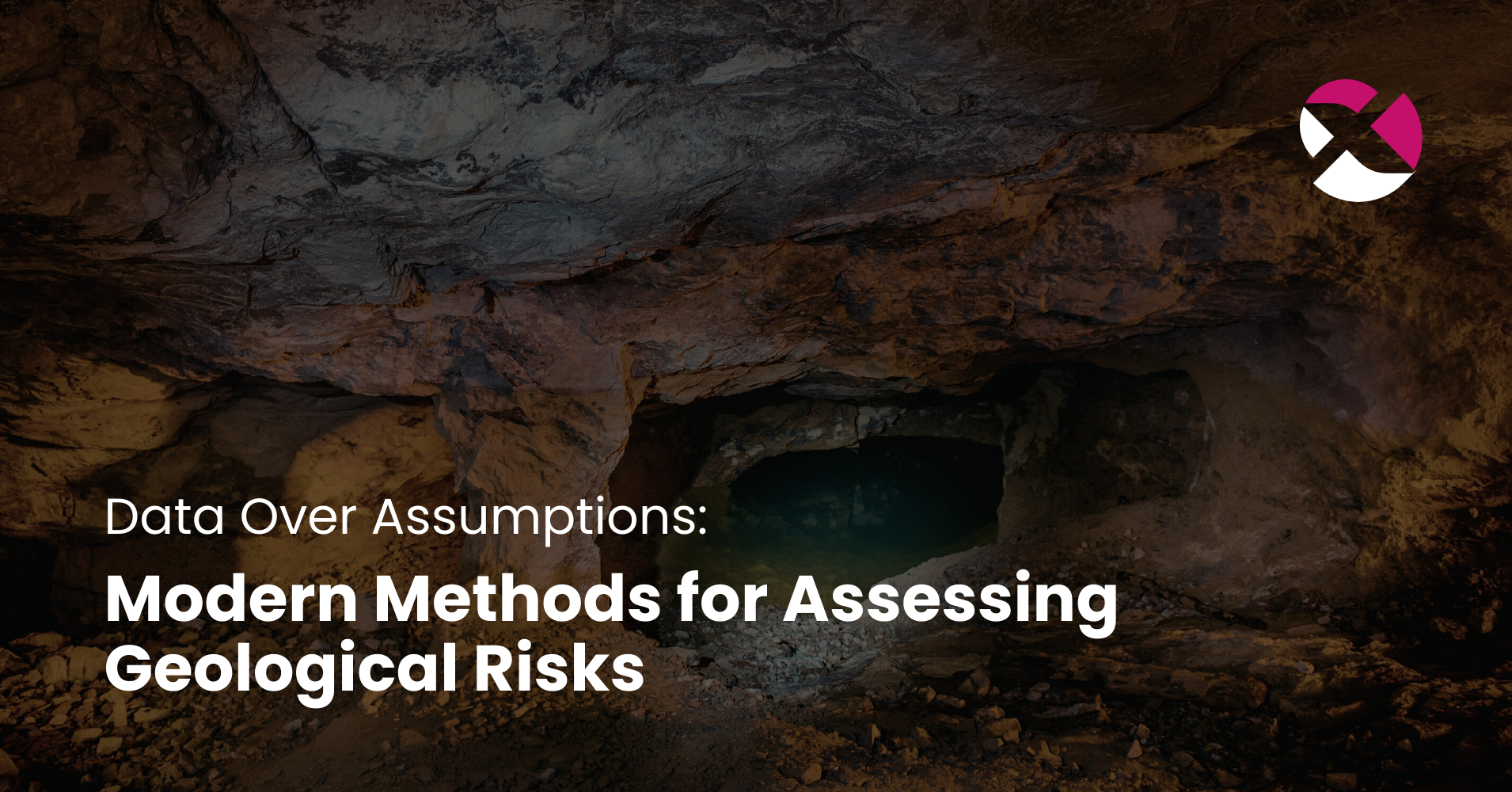
Geological risks accompany almost every major infrastructure, energy, or construction project. Whether in tunnel construction, geothermal energy, mining, CO₂ storage, or large-scale building projects, uncertainties in the subsurface remain one of the most significant sources of cost overruns, delays, and safety challenges.
At the same time, the industry is facing a new reality: the amount of available geological data is growing rapidly, while modern analysis and modeling methods are becoming increasingly powerful. This development creates a major opportunity. By leveraging modern data-driven approaches, geological risks can now be assessed more accurately, detected earlier, and communicated more effectively than ever before. The transition from traditional geological analysis toward data-driven decision-making is currently reshaping the entire field of subsurface risk assessment.
The Challenge of Geological Uncertainty
The subsurface is an inherently complex system. Even in well-studied regions, uncertainties remain regarding geological structures, rock properties, and hydrogeological conditions. Small-scale variations in rock formations can have major impacts on construction projects or energy developments. Particularly critical factors include unexpected fault zones, variations in rock strength, and previously unknown water-bearing layers.
Traditionally, geological risk assessments relied heavily on limited data sources and expert interpretation. Drill cores, geological maps, seismic profiles, and laboratory analyses provided valuable insights but were spatially restricted. As a result, important decisions often had to be made based on relatively sparse data points.
In many projects, this approach meant that significant risks only became apparent during construction. Unexpected geological conditions could lead to delays, increased costs, or additional safety measures. Especially in large infrastructure projects, subsurface uncertainty can therefore become one of the most critical project risks.
The Role of Modern Data Methods
Digitalization is fundamentally changing how geological data is collected and analyzed. New technologies allow for far more comprehensive observation of the subsurface than in the past. Satellite observations, drone surveys, geophysical measurement techniques, and continuous sensor monitoring now provide high-resolution information about the structure, movement, and physical properties of geological formations.
Among the most important modern data sources are:
- satellite-based deformation monitoring (InSAR)
- high-resolution 3D seismic surveys
- digital borehole logging and well data
These technologies generate enormous amounts of data. However, the real progress lies in integrating these heterogeneous datasets and analyzing them together. Modern data platforms and cloud-based infrastructures allow geological information from different sources to be combined within unified models.
This integrated approach provides a much more comprehensive understanding of the subsurface than traditional methods ever could.
Geostatistics and Probabilistic Modeling
A central component of modern geological risk analysis is geostatistics. These methods allow spatial models to be created from individual measurement points while also quantifying the uncertainty associated with them.
In the past, geological models were often deterministic, meaning that a single “best interpretation” of the subsurface was produced. Today, probabilistic approaches offer a more realistic way of addressing uncertainty. Instead of generating just one model, multiple possible geological scenarios can be simulated.
These models help answer critical questions:
- Which areas of a project are well constrained by data?
- Where do significant uncertainties remain?
- Which geological features could pose potential risks?
For project developers, this provides a far more robust basis for decision-making and risk evaluation. Particularly in complex subsurface environments, probabilistic modeling can help identify critical zones early and guide additional exploration activities more effectively.
3D Subsurface Models as the Foundation for Analysis
Another major advancement is the development of integrated three-dimensional subsurface models. Modern geological modeling software can combine geological, geophysical, and geotechnical data within a consistent 3D framework.
These models do far more than visualize geological structures. They form the basis for numerical simulations that support engineering decisions. Examples include stability analyses in tunnel construction, fluid flow simulations in geothermal reservoirs, or stress modeling in underground rock formations.
One key advantage of digital subsurface models is that they can be updated continuously. As new data becomes available, it can be integrated into the model, gradually improving its accuracy throughout the project lifecycle. This creates an iterative workflow in which data acquisition, modeling, and risk assessment evolve together.
Data Visualization and Interactive Analysis
In addition to modeling, visualization plays an increasingly important role in geological risk assessment. Subsurface data must often be interpreted by interdisciplinary teams that include geologists, engineers, project managers, and decision-makers.
Communicating complex geological information clearly is therefore essential for informed decision-making. Modern web technologies now allow complex geological models to be visualized directly in a browser and explored interactively.
One example is our SubsurfaceViewer, a platform designed to make subsurface data easier to access and interpret. The tool enables geological data and models to be visualized directly in a web-based 3D environment.
The SubsurfaceViewer allows users to explore geological structures, boreholes, and model data interactively. This makes it easier for project teams to work with the same data, analyze subsurface conditions, and quickly understand geological relationships. In large infrastructure projects in particular, such tools significantly improve communication between different disciplines and stakeholders.
Machine Learning in Geological Risk Analysis
Beyond traditional statistical methods, machine learning is becoming increasingly relevant in subsurface analysis. Algorithms can analyze large datasets and detect patterns that may be difficult for humans to identify.
Applications range from automated interpretation of geophysical data to the analysis of geotechnical monitoring information during construction projects. Machine learning techniques can help identify correlations, detect anomalies, and improve predictive models.
The most promising approaches combine data-driven algorithms with physics-based geological models. While geological expertise provides the understanding of subsurface processes, machine learning can extract additional insights from complex datasets. Together, these approaches form hybrid models that significantly enhance geological risk analysis.
Natural Hazards and Monitoring
Data-driven approaches are also transforming the analysis of natural hazards. Landslides, rockfalls, and ground subsidence can now be monitored far more precisely than in the past.
Satellite-based measurement techniques are capable of detecting ground movements in the millimeter range across large areas. When combined with topographic information, geological data, and meteorological observations, these measurements enable the development of risk models that identify vulnerable regions at an early stage.
Typical data sources used in such monitoring systems include:
- satellite InSAR data for detecting subtle ground deformation
- high-resolution digital terrain models derived from LiDAR or drone surveys
- rainfall and climate data to evaluate triggering factors
- geological maps and structural subsurface models
By combining these datasets, scientists and engineers can better understand the relationships between geology, topography, and external environmental influences. These monitoring systems are increasingly used to protect infrastructure, transportation networks, and populated areas by identifying potential hazards before they escalate.
Digital Twins of the Subsurface
One of the most dynamic trends in geological risk analysis is the development of digital twins of the subsurface. A digital twin is a dynamic model that is continuously updated with new measurement data, providing a real-time representation of subsurface conditions.
Such models are already being applied in tunnel construction, geothermal projects, mining operations, and CO₂ storage facilities. Sensors deliver ongoing information about stress conditions, deformation, or fluid movements, which can then be integrated directly into the digital model.
This approach allows engineers and geoscientists to monitor system changes in real time and simulate possible future scenarios. As a result, risks can not only be analyzed but actively managed throughout the lifecycle of a project.
Data Management as the Foundation
With the rapid growth of available geological data, structured data management has become increasingly important. Large volumes of subsurface data must be stored, documented, and made accessible to project teams.
Without standardized data structures and clear documentation, it becomes difficult to integrate datasets or maintain consistent models over time. For this reason, many organizations are investing in centralized geodata platforms that support efficient data management and long-term data usability.
Effective data management is essential for ensuring that modern analytical and modeling tools can fully realize their potential.
The Future of Geological Risk Assessment
Geological risk assessment will become even more data-driven in the future. Advances in remote sensing, high-performance computing, and artificial intelligence are continuously expanding the capabilities of geoscientific analysis.
At the same time, geological expertise remains indispensable. Data alone cannot provide reliable decisions; it must be interpreted within the context of geological processes and subsurface dynamics.
The future of geological risk assessment therefore lies in combining both worlds: powerful data-driven methods and deep geological expertise. Organizations that successfully integrate these approaches will be able to better understand subsurface uncertainties and manage geological risks more effectively—an increasingly critical advantage in complex infrastructure and energy projects.