Digitalisation is changing almost every area of our lives, including the water sector. The...
The European water industry is facing profound change. Climate change with increasing droughts and heavy rainfall events, rising water quality requirements, ageing infrastructure, urbanisation and growing regulatory pressure are shaping the sector. At the same time, digitalisation, IoT, advanced analytics and artificial intelligence are opening up new opportunities for more efficient and sustainable water management.
In this context, so-called data spaces are becoming increasingly important as a central element of the European data strategy. They create the basis for secure, sovereign and trustworthy data exchange across organisational and national borders – a crucial factor for critical infrastructure such as water management.
This article highlights the role of data spaces in the European water industry, shows what already exists today, what developments are still to come and what concrete opportunities are emerging for utilities, authorities, cities and the economy.
What are Data Spaces?
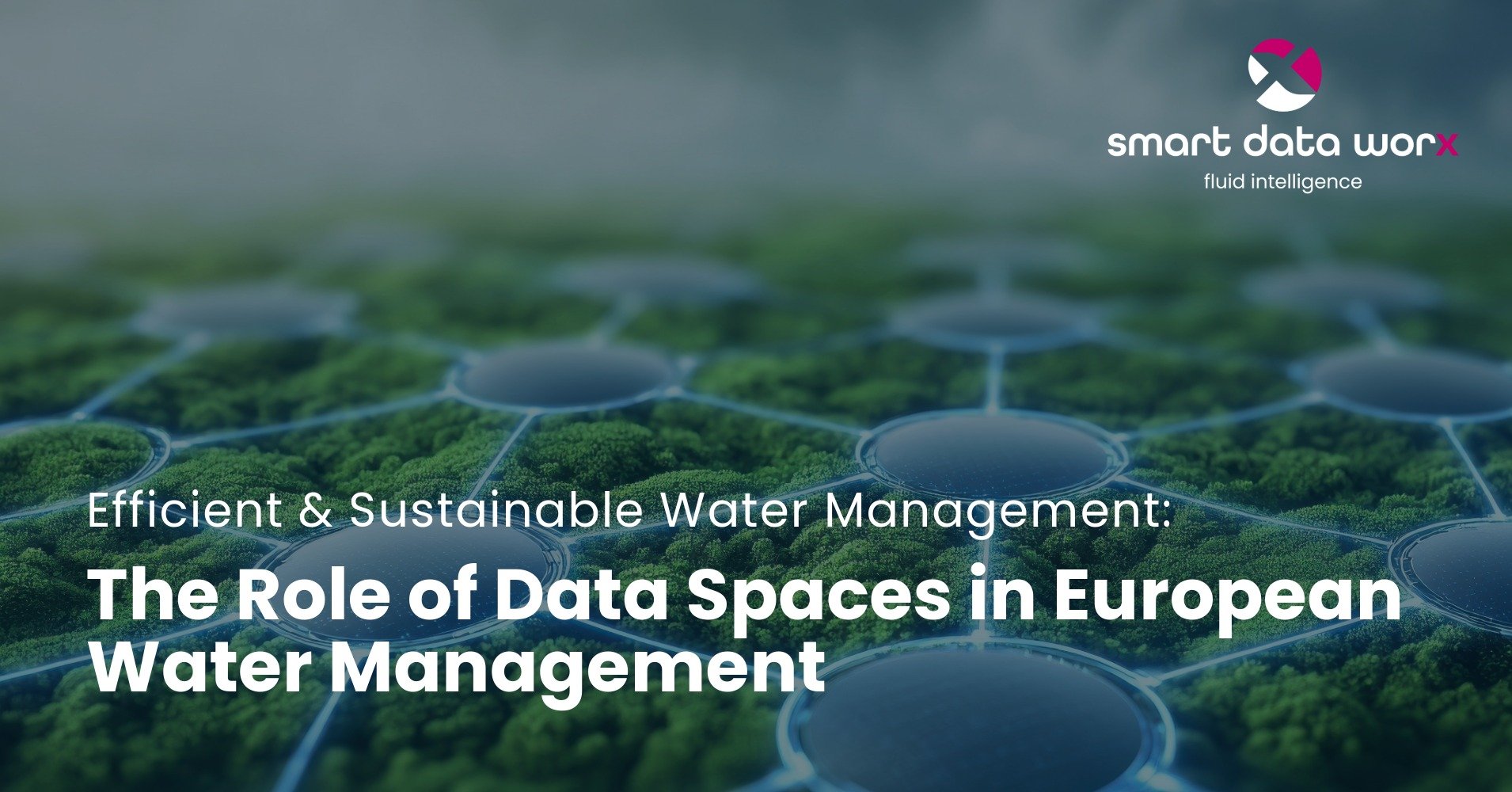
Data spaces are federated data ecosystems in which different actors can exchange and use data under clearly defined rules. The focus is not on centralised data storage or data monopolies, but on data sovereignty and controlled data use.- The key principles of data spaces are:
- The data owner retains control over their data at all times
- Uniform standards ensure interoperability
- Clear governance and trust mechanisms regulate access and use
- The architecture is decentralised and federated
In contrast to traditional data platforms, data spaces are not primarily concerned with collecting as much data as possible, but rather with its context-sensitive, secure and value-adding use across organisational boundaries.
The European data strategy provides for sector-specific data spaces – including for energy, mobility, industry, health and the environment. Water management is a cross-cutting area with high social, ecological and economic relevance.
The current situation of water management in Europe
The European water industry has developed historically and is highly fragmented. There are thousands of municipal and regional water suppliers with very different levels of organisational, technical and digital maturity. At the same time, the sector is subject to a multitude of national and European regulations, for example in the areas of drinking water quality, wastewater treatment, environmental protection, data protection and critical infrastructure. This regulatory diversity makes uniform digitalisation difficult and promotes the emergence of heterogeneous IT and data landscapes.
At the same time, enormous and continuously growing amounts of data are being generated, for example from sensor technology and IoT systems in networks and plants, smart meter infrastructures, weather, climate and environmental data, geodata, and from operating, maintenance and repair processes. In addition, there are external data sources, for example from public authorities, research institutions or other public service providers, which are becoming increasingly important for a holistic view.
In practice, this data is often stored in isolated specialist applications, proprietary platforms and organisational silos. Uniform data models, clear data responsibilities and interoperable interfaces are often lacking or only available to a limited extent. Cross-organisational, cross-divisional and cross-sector data exchange is therefore technically, organisationally and legally complex and involves a great deal of effort. This prevents the consistent use of existing data potential, for example for predictive maintenance, resilient network control, climate adaptation measures or more efficient resource management.
At the same time, the water industry is facing growing challenges: climate change with more frequent extreme events, increasing investment needs in ageing infrastructure, growing demands for transparency and sustainability, and a growing shortage of skilled workers. These developments are increasing the pressure to enable data-based decisions and to use existing data more efficiently and securely.
This is precisely where data spaces come in. They create a standardised, sovereign and trustworthy framework for the controlled exchange and sharing of data across organisational and sectoral boundaries without relinquishing the data sovereignty of the individual actors. This opens up new opportunities for cooperation, innovation and the sustainable development of the European water industry.
Current initiatives and developments
Important foundations have been laid at European level in recent years. The European Data Strategy, the Data Governance Act and the Data Act define the legal framework for data sharing, data sovereignty and the handling of data in critical infrastructures. These regulations are also of central importance for water management.
GAIA-X is a European initiative for a sovereign data infrastructure. GAIA-X provides architectural principles, trust frameworks and federated services that can serve as the technological basis for sectoral data spaces, including in the water sector.
In addition, there are numerous domain-specific approaches, such as environmental and climate data platforms such as Copernicus or INSPIRE, national water information systems and research-driven data spaces for hydrology and water management.
These initiatives are important building blocks, but they are often project-driven, not fully interoperable and only limitedly geared towards the operational needs of water suppliers. A consistent, productive European Water Data Space is currently still under construction.
Why data spaces are essential for water management
A key characteristic of water is that it knows no administrative boundaries. River basins, groundwater bodies and extreme weather events transcend municipal, regional and national jurisdictions. At the same time, responsibilities, data management and decision-making processes in water management have historically been organised along precisely these administrative boundaries. For the first time, data spaces enable structured, standardised and trustworthy data exchange along real hydrological systems – regardless of institutional boundaries, but while maintaining the data sovereignty of all parties involved.
This opens up new possibilities for operational water management that were previously hardly feasible. Data from surface waters, groundwater, drinking water distribution and wastewater disposal can be integrated and viewed in their overall context. Cross-basin management is supported, as is better coordination between water suppliers, wastewater companies, environmental and regulatory authorities, and research institutions. Decisions can no longer be made in isolation, but on the basis of a common, consistent understanding of the data.
Data spaces also play a crucial role in resilience, risk and crisis management. In the event of flooding, heavy rainfall, drought or contamination, fast, robust and data-based decisions are essential. Data spaces facilitate the secure exchange of real-time and near-real-time data, enable the operation of joint early warning systems and create the basis for predictive models, simulations and scenario analyses. This allows risks to be identified at an early stage, impacts to be better assessed and measures to be initiated in a coordinated manner – across organisational and jurisdictional boundaries.
In addition, data spaces make a significant contribution to increasing efficiency in ongoing operations. By combining operational, sensor and maintenance data, leaks can be detected earlier, maintenance measures can be planned in a more targeted manner and investment decisions can be prioritised on the basis of data. This is particularly relevant in the context of ageing infrastructure and limited financial resources. At the same time, data spaces enable better comparability of key figures and benchmarks without exposing sensitive operating data in an uncontrolled manner.
Last but not least, data spaces lay the foundation for new data-driven services, business models and innovation ecosystems in water management. Research and innovation partners can access relevant data under clearly defined terms of use, develop digital twins of catchment areas or networks, and test AI-supported applications. Utilities and public actors retain control at all times over who is allowed to use which data for what purpose. Data spaces thus become a key enabler for cooperation, innovation and the long-term transformation of the European water industry towards greater sustainability, resilience and efficiency.
Specific usecases
Data spaces create a secure and standardised framework for cross-sector data exchange and use. They enable new forms of collaboration, increase the efficiency of existing processes and form the basis for data-driven decisions. This results in a wide range of added value for different stakeholder groups:-
water supplier
Use data spaces for anonymised benchmarking, AI-supported consumption and loss forecasts, and for the easy integration of external data sources such as weather and climate information. -
authorities
Benefit from evidence-based regulation, improved monitoring of European directives and increased transparency for citizens. -
Research and innovation
Gain access to high-quality, real-world operating data and translate research findings into practice more quickly and efficiently. -
Smart cities and regions
Use data spaces as the basis for integrated planning and resilience strategies – across sectors and with a view to the future.
Challenges and success factors
Despite their great potential, data spaces in water management face several challenges. Key issues are trust and data sovereignty, as much water data is sensitive and relates to critical infrastructure. Stakeholders must be sure that they retain control over their data and that it is only used for specific purposes. In addition, there are legal and regulatory uncertainties, particularly in relation to data protection, security requirements and cross-border data exchange.
Another hurdle is the widely varying degrees of digital maturity among the parties involved. Heterogeneous IT landscapes, a lack of standards and limited human and financial resources – especially among smaller utilities – make interoperability and participation difficult. The question of sustainable financing and long-term operation of data spaces also remains unresolved in many cases.
Data spaces will be successful if clear and transparent governance structures are established that clearly define roles, responsibilities and rules of use. Close European and national coordination is necessary to harmonise standards and avoid isolated solutions. It is equally crucial to focus on specific, practical use cases with recognisable added value, such as crisis management, network management or investment planning.
Ultimately, the success of data spaces depends on the interaction of technology, organisation and culture. In addition to suitable technical solutions, organisational adjustments, training and a cooperative data culture are needed, in which data sharing is understood as a common benefit for sustainable water management.
Conclusion
Data spaces are not an end in themselves, but rather a strategic enabler for a sustainable European water management system. They lay the foundation for cooperation, innovation and resilience in a sector of central social and ecological importance.
While important building blocks already exist, the real potential still lies ahead of us. A European Water Data Space connecting utilities, authorities, research and industry can become a key instrument for sustainable water management in the 21st century.
Now is the right time to actively shape this development – technologically, organisationally and politically.